Establish What Needs To Be Removed
Commercial asbestos removal starts with reliable information about the material and its location. An up-to-date survey or targeted investigation helps define the work, access and boundaries. A vague description such as old ceiling boards is not enough to determine the removal method or licensing category.
Removal may be required where refurbishment will disturb a material or its condition makes management in place unsuitable. Intact material away from foreseeable disturbance may have other management options. A competent assessment should explain why removal, repair, protection or continued monitoring is the appropriate route.
Which Leicester Removal Tasks Require A Licence?
Higher-risk asbestos work must be carried out by an HSE-licensed contractor. The Control of Asbestos Regulations 2012 distinguish licensed work from non-licensed work, including notifiable non-licensed work where relevant. The material type, condition and planned activity all matter when assessing the category.
Non-licensed does not mean unregulated or suitable for an untrained maintenance team. Training, risk assessment and suitable controls remain necessary. Ask the proposed contractor to explain the work category and provide relevant licence details where the activity requires a licence.
How A Removal Project Is Organised
First, agree a removal specification based on survey findings and the intended future use of the area. Confirm service isolations, waste routes, occupied areas and access restrictions. An operational factory or shared office building needs particular attention to the boundary between the work zone and other people.
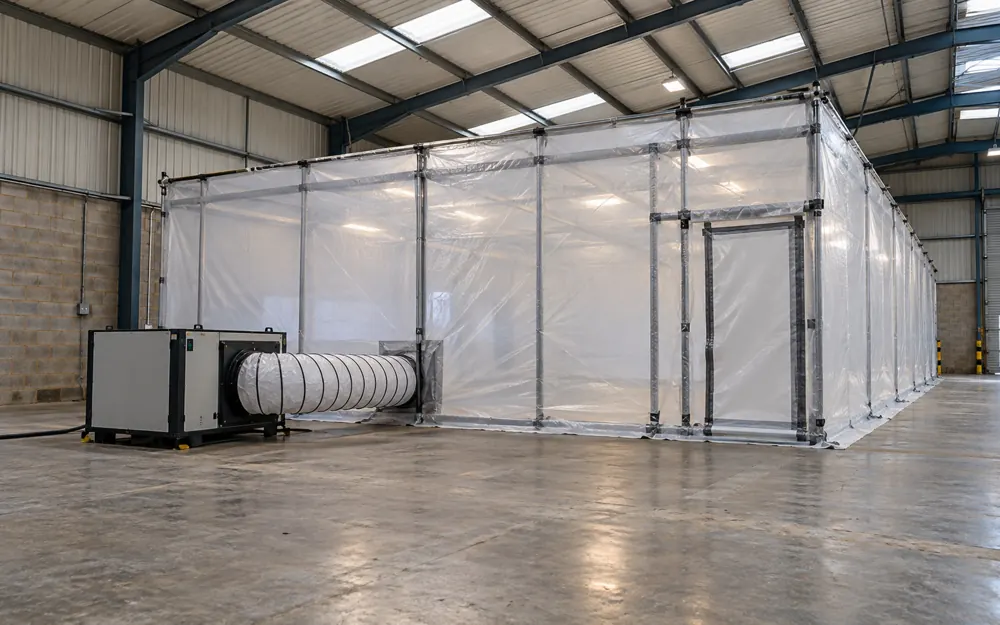
Next, the contractor prepares the risk assessment and plan of work. For licensable work, applicable notification requirements and any necessary enclosure arrangements must be addressed before work begins. The programme should allow for preparation, removal, cleaning and any required independent clearance.
At completion, check the agreed handover documents rather than relying on a verbal statement that the space is ready. Depending on the work, this may include removal records, clearance documentation and hazardous waste paperwork. Update the building register so future contractors know what has changed.
Clearance And Independent Analytical Work
Removal and clearance are distinct activities. Where four-stage clearance is required for licensed enclosure work, a suitably accredited analyst checks the relevant conditions and issues the appropriate certification if the area passes. A visual check by the removal team should not be presented as independent clearance.
HSE guidance HSG247 covers licensed removal practices and HSG248 addresses analytical and clearance procedures. The analytical appointment should have a defined scope and appropriate independence. Discuss who is appointing the analyst and who receives the records before the removal programme is fixed.
A satisfactory air test alone does not establish that every surface is clean or that every material was removed. The complete clearance process and the removal scope need to be understood together. Keep the resulting documents with the current asbestos records for the premises.
Disposal And The Waste Trail
Asbestos waste needs a lawful route from the premises to an authorised destination. This includes appropriate packaging, transport by a suitably registered carrier and relevant hazardous waste consignment documentation. Check that the receiving facility can accept the type of waste being removed.
Do not mix suspect asbestos debris with ordinary commercial waste or place it in a general skip. Waste records should connect the removal project with the collection and destination. Keep copies with the project documents so the responsible person can demonstrate how the waste was handled.
What Affects Removal Cost
The material, quantity, condition and access can all influence removal cost. Enclosures, decontamination arrangements, specialist access, working hours and analytical requirements may also affect the scope. Waste packaging, transport and disposal should be visible in the quotation rather than left as an unexplained extra.
Ask bidders to use the same survey information and removal boundary. Confirm whether making good, replacement finishes and service reinstatement are included or need separate contractors. Use our quote form to describe your commercial site and the planned work so the right specialist requirements can be assessed.
Removal & Disposal FAQs
Does All Asbestos Need A Licensed Removal Contractor?
Asbestos removal does not always require a licensed contractor, but higher-risk work does. The decision depends on the material, condition and activity, with some non-licensed work also requiring notification. A competent contractor should explain the classification and controls for your project before you accept a quotation or allow the work to start.
What Paperwork Should Follow Asbestos Disposal?
Asbestos disposal should be supported by the relevant hazardous waste consignment paperwork and records linking the waste to an authorised destination. Ask for the collection arrangements, carrier registration and destination details before removal. Keep the completed documents with the building asbestos records, alongside any removal report and applicable independent clearance documentation.
Further guidance: HSE asbestos guidance.